What is eBiodiversity?
Mission
The mission of the Estonian Biodiversity Data Portal is to make information about species found in Estonia available and downloadable from a single source.
What is eBiodiversity?
eElurikkus is the Estonian biodiversity data portal. It provides access to species records found in Estonia, including specimens and samples stored in scientific collections and biobanks, DNA-based and human-made species observations, research data, and other species-related information. The eElurikkus data resource consists of databases available as open data. Most are databases managed on the PlutoF platform (plutof.ut.ee), as well as, for example, the Ministry of the Environment's EELIS nature observations database (LVA). These databases are owned by scientists, citizen scientists, state and research institutions. If you wish to see your or your institution's data on the eElurikkus portal, please contact us info@elurikkus.ut.ee.
What is the public data usage policy?
The data displayed on the eElurikkus portal is mostly freely accessible and downloadable. Specific usage licences can be viewed in the Data Resources menu, as the databases may have slightly different licences. The use of data for analyses or other purposes is free, but it requires proper attribution. The rights to multimedia files (images, sounds, and videos) displayed on the page belong to the file owner and/or authors.
Brief Overview of the Portal's Development
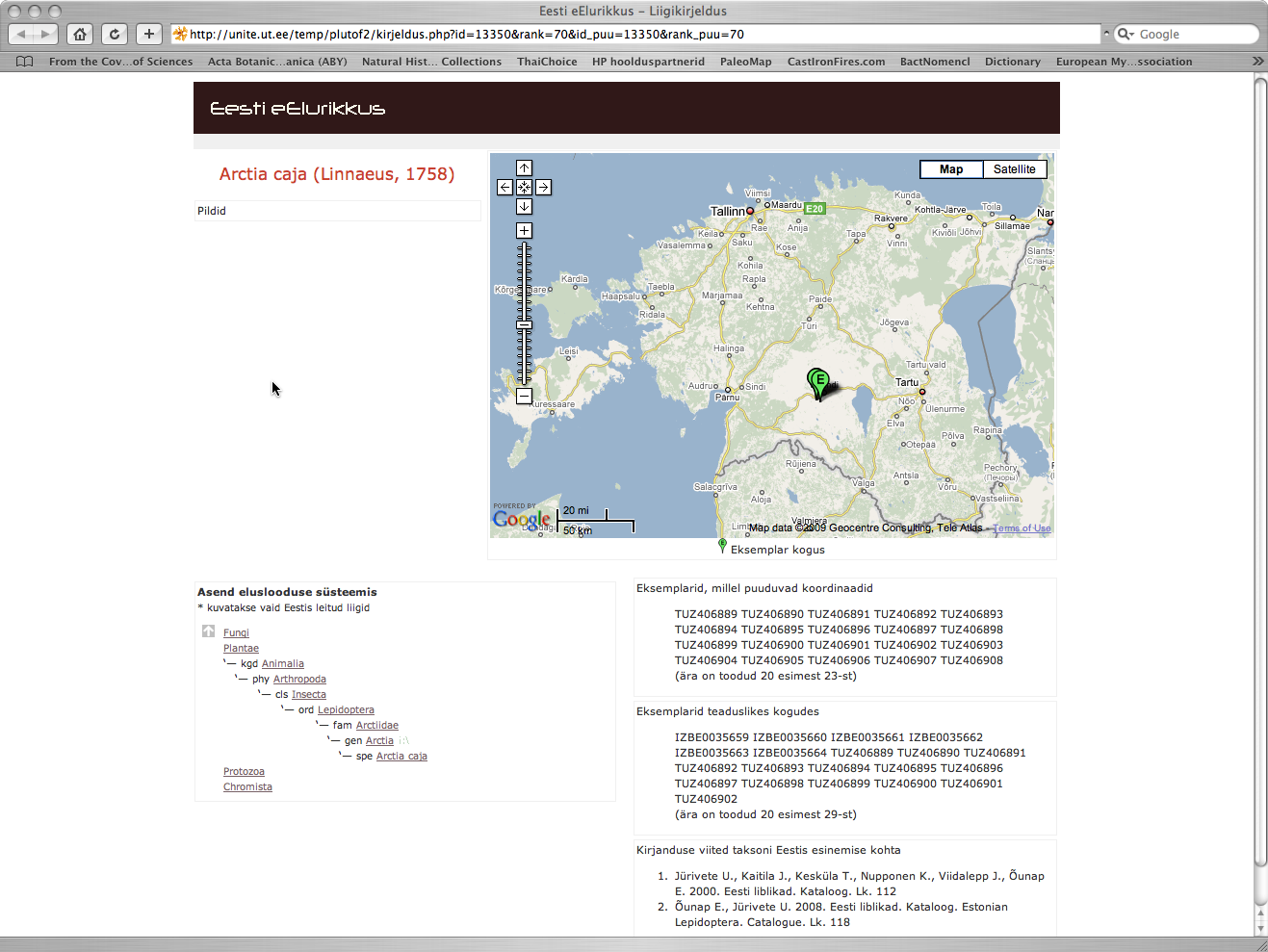
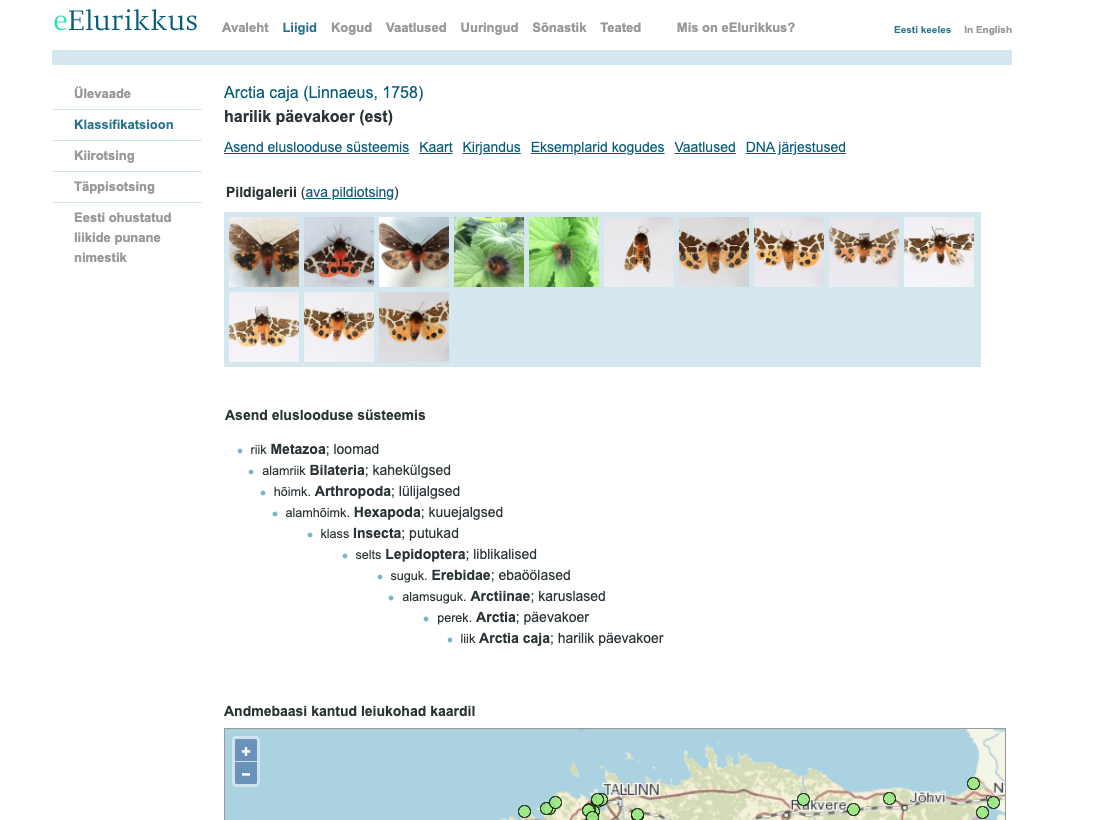
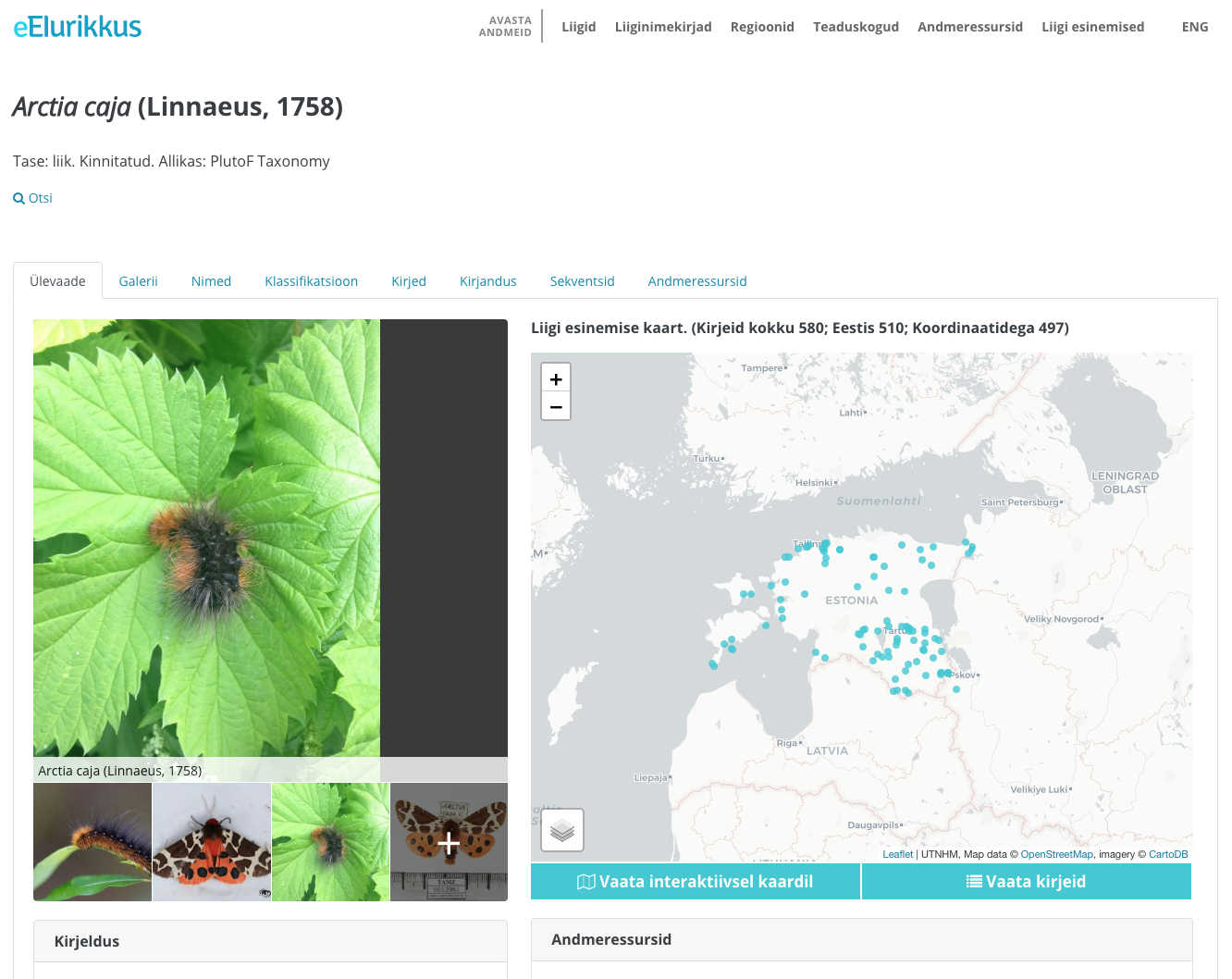
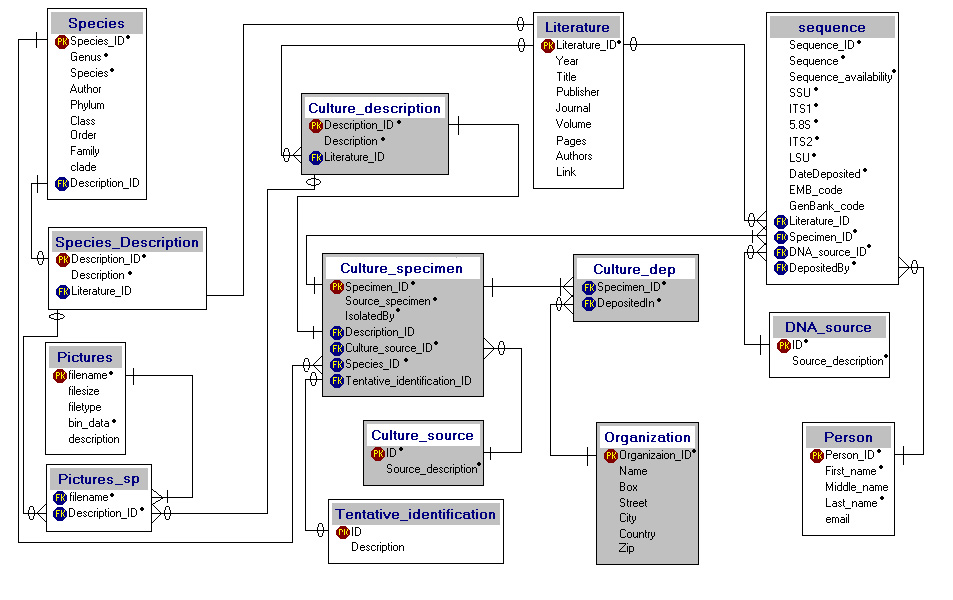
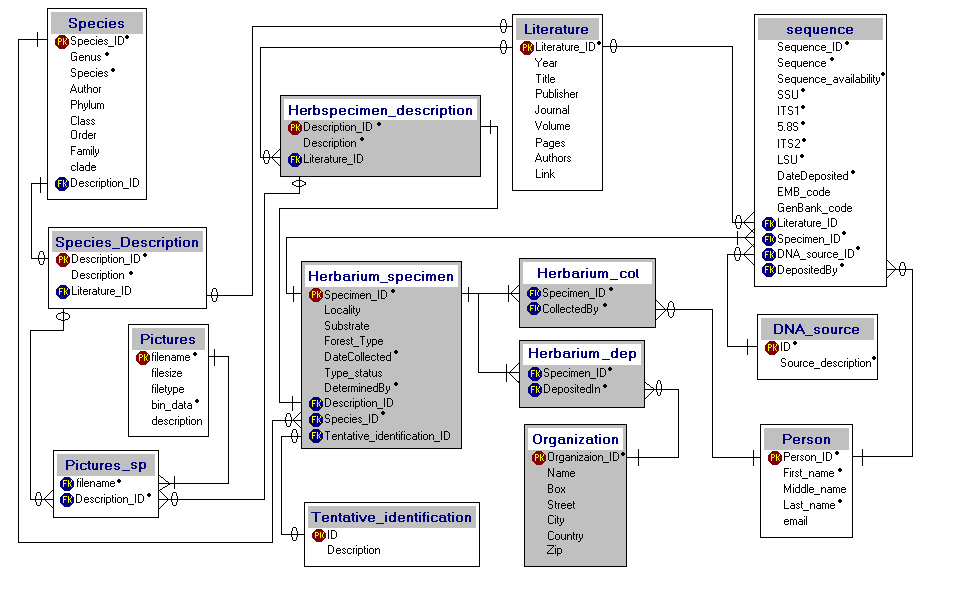
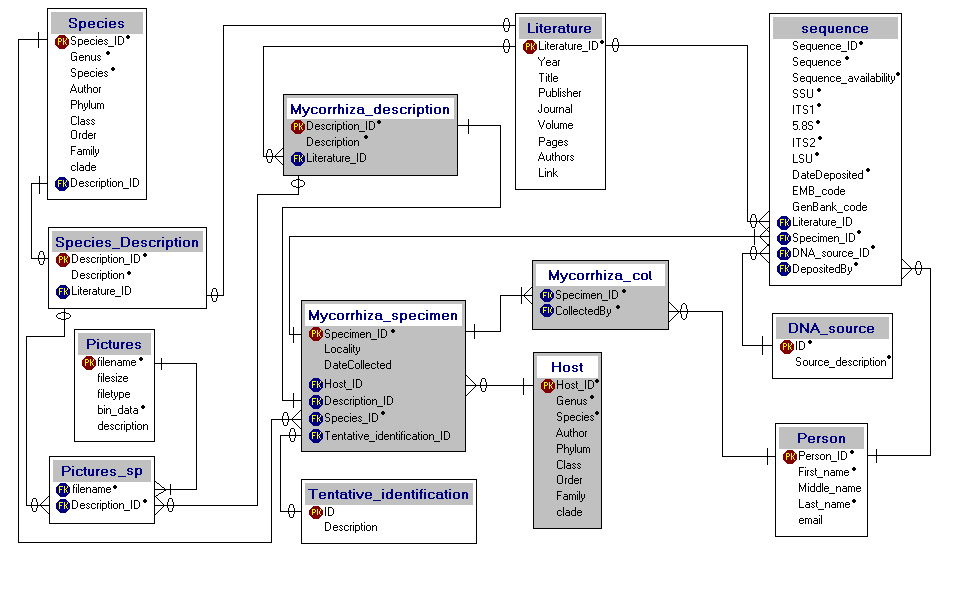
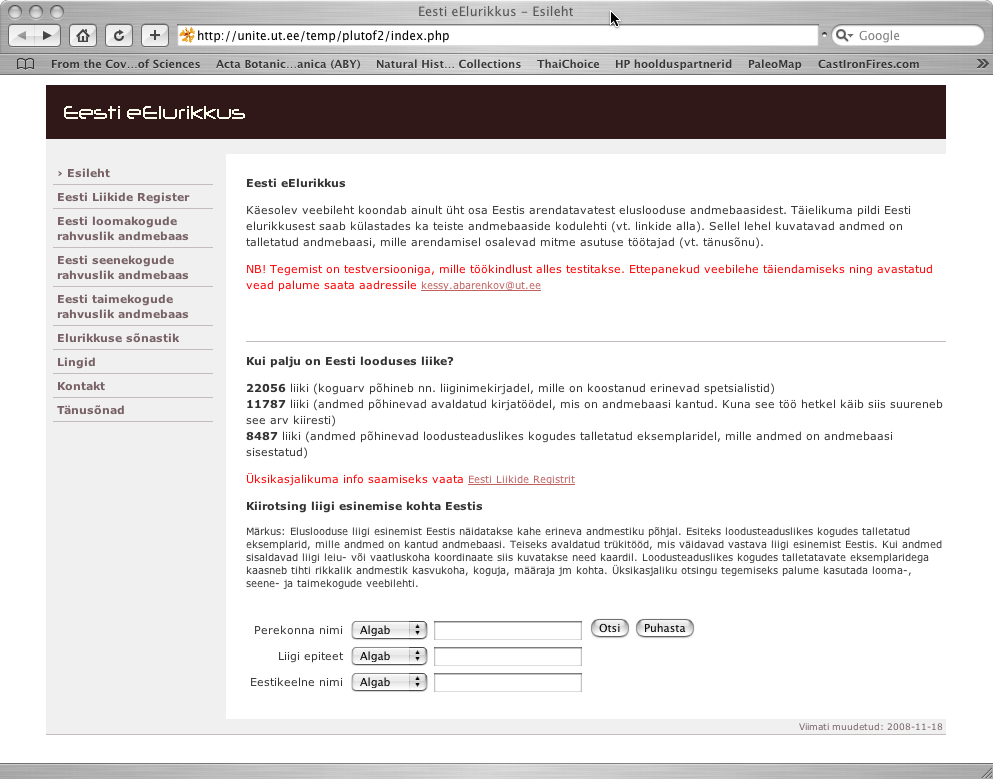
The beginning of the biodiversity data portal dates back to the autumn of 2001. At that time, employees of the Zoology and Botany Institute (Estonian University of Life Sciences), Urmas Kõljalg and Aavo Kuslapuu, created the first relational database. Its purpose was to manage data on living and prepared specimens stored in scientific collections, including gene sequences, and to link them with the data on the symbiosis between fungi and plant roots, i.e., mycorrhiza. At the end of the same year, Kessy Abarenkov, a biotechnology student from the University of Tartu, joined the development team. At the end of the text, there is a diagram of the database tables from 2003. Initially, it mainly dealt with the global dataset of the international scientific community UNITE, of which the dataset related to Estonia constituted a small part. Between 2003 and 2004, the development work moved to the University of Tartu, where research on data management began to develop at the restored natural history museum and the Institute of Ecology and Earth Sciences. By 2006, several Estonian scientific collections and working groups were already using the same data management platform. As a result, the amount of information about species found in Estonia in the databases grew rapidly, and a real opportunity arose to open the Estonian species data portal. In addition to the aforementioned three, Ivar Puura joined the development work. At his initiative, a project was launched in 2007 to digitize information about Estonian species appearing in publications. Many Estonian taxonomists participated in this work, and by 2008, there was enough information in the databases to open the public eElurikkus portal. An important contribution to the development of the portal's observation section came from ornithologists, who, under the leadership of Margus Ots, began to use the portal in their daily work. One of the first versions of the data portal can be seen in Figure 2, and Figures 3, 4, and 5 show how the information sheets for the same species have evolved over time. In 2018, the tenth anniversary of the biodiversity data portal was celebrated, and in connection with this, a completely new portal based on the Atlas of Living Australia software was opened. The new portal was developed by the PlutoF platform team (plutof.ut.ee/en/team). The new version of the data portal was funded by the Ministry of Education and Research through the NATARC object of the Estonian Science Infrastructure Roadmap (natarc.ut.ee).
Structure of PlutoF tables from 2003
Garden tiger moth (Arctia caja) species page